Stop Overthinking Your Insulation:The 3-Layer System That Just Works
You’ve been there. Scrolling through endless forum threads at midnight, watching YouTube videos about reflective barriers and R-values. Everyone’s got an opinion about the “perfect” insulation for vehicles, and they all contradict each other.
Here’s the truth: you don’t need a PhD in thermodynamics to insulate your van properly. You just need a simple 3-layer approach that’s been proven to work.
Why Most People Get Van Insulation Wrong
Walk into any auto shop and you’ll find dozens of insulation products. Foil bubble wrap. Spray foam. Sound deadening mats. The options are overwhelming.
The problem? Most people use the wrong product for the wrong job or layer them incorrectly. They might install sound deadening and call it thermal insulation. Or they’ll stick reflective foil directly to metal panels, making it practically useless.
Recent studies show that properly applied thermal insulation can reduce interior temperatures by 10-15°C in vehicles exposed to high external heat. That’s the difference between a comfortable drive and stepping into an oven. But you only get these results when you address all three types of heat transfer.
The Three Heat Enemies You’re Fighting
Heat moves in three specific ways, and your insulation for vehicles needs to block all of them.
Radiant Heat travels as invisible rays from the sun, your engine, or any hot surface. It’s why your van’s roof feels like a frying pan after sitting in the car park.
Conductive Heat is direct contact transfer. Hot metal panels pass heat straight through, which is why your caravan walls sweat in winter and burn your hand in summer.
Convective Heat is airflow-based. Hot air rises, cold air sinks, and this creates temperature loops inside your vehicle. It’s the reason your feet freeze while your head roasts.
The 3-Layer System That Actually Works
Here’s the good news: you don’t need to reinvent the wheel. The most effective insulation for caravans and van insulation Australia setups follow the same proven pattern.

Layer 1: Sound Deadening (The Foundation)
Start with quality sound deadening material on your metal panels. This creates a solid base that stops vibrations and provides stability for your next layers. Closed-cell foams can reduce noise levels by 8-12 dB in automotive applications.
Kool Wrap’s sound deadener uses advanced materials that won’t deteriorate in heat like cheaper bitumen-based options. It’s self-adhesive – just clean the surface, peel, and stick.
Layer 2: Thermal Barrier (The Workhorse)
This is where the magic happens. A closed-cell foam insulation layer does the heavy lifting against conductive heat. The closed-cell structure means thousands of tiny air pockets that heat can’t easily pass through.
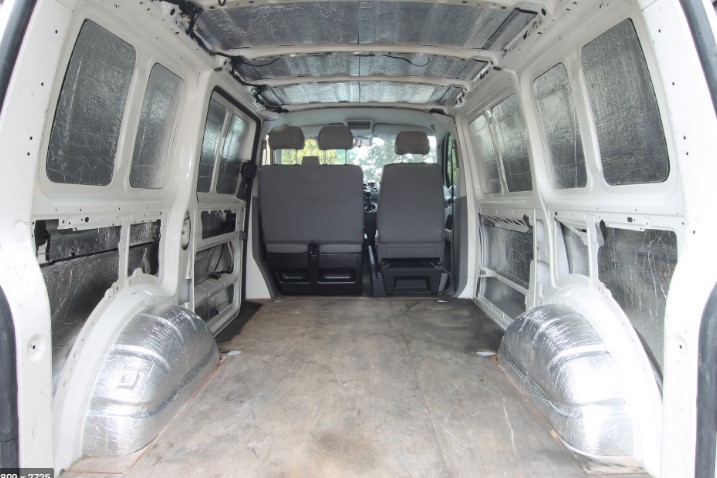
For van insulation Australia conditions, you want at least 10mm of quality foam. Kool Wrap’s Van Liner fits this perfectly – it’s a closed-cell insulating foam with a professional foil backing. The foam handles conduction, whilst the foil tackles radiation.
This layer also solves the condensation nightmare. In winter, when you’re sleeping in your van, your warm breath meets cold metal walls. Without a barrier, you’ll wake up to water dripping everywhere. The closed-cell foam creates that crucial barrier, keeping moisture out of your living space.
Layer 3: Reflective Shield (The Finisher)
The final layer reflects radiant heat back where it came from. In summer, this means bouncing the sun’s heat away. In winter, it reflects your heater’s warmth back inside.
Reflective materials work best with an air gap, but when that’s not possible (like in a van), a high-quality reflective foil bonded to your insulation foam still makes a measurable difference. Research indicates that when applied correctly, quality heat shields and insulation can stop over 90% of heat transfer.
Why Self-Adhesive Van Insulation Changes Everything
The old way involved cutting insulation boards and working out how to attach them without screws (which create thermal bridges). Modern self-adhesive van insulation turns this into an afternoon project.
Industrial-grade adhesive sticks to clean metal surfaces permanently. No drilling. No thermal bridges. No specialist tools needed.
The Kool Wrap system combines your thermal barrier and reflective layer in one product. That’s two steps done in one go, with a professional high-gloss finish.
Real-World Benefits You’ll Actually Notice
Here’s what changes after installing proper insulation for vehicles:
Your climate control works properly. According to Australian Standards (AS 4982-2003) for thermal performance testing, proper insulation significantly reduces cooling and heating loads in vehicles. Your air-con or heater doesn’t have to work overtime.
Condensation disappears. No more damp bedding or musty smells. The closed-cell foam creates a vapour barrier that keeps moisture outside.
It’s actually quiet inside. Road noise drops significantly. You can have a conversation without shouting.
Your fuel economy improves. When your heating and cooling systems aren’t working as hard, they draw less power.
The Insulation for Caravans Approach Works for Vans Too
Caravans and vans face identical thermal challenges. Both are metal boxes that turn into ovens in summer and fridges in winter. That’s why the same 3-layer principles work across both.
Whether you’re fitting out a caravan or converting a van, the approach stays the same: sound deadening, thermal barrier, reflective shield.
Skip the Mistakes, Get It Done Right
The beauty of modern van insulation kits is they’re designed as complete systems. Everything works together because it’s engineered to.
The Kool Wrap range includes complete van insulation packages sized for different vehicles, from small 4WDs to extra-long high-roof vans. Each kit includes sound deadening and thermal barrier layers, with everything easy to trim with scissors.
Your Next Steps
Stop overthinking it. The 3-layer system works because it addresses all three types of heat transfer. Sound deadening for vibration control. Closed-cell foam for thermal protection. Reflective backing for radiant heat.
Modern self-adhesive products make installation straightforward for a weekend DIY project. The results – cooler summers, warmer winters, zero condensation, and a quieter ride – are immediately noticeable.
Whether you’re building a weekend camper or a full-time mobile home, getting your insulation right makes everything else work better. Choose quality materials designed for Australian conditions, follow the 3-layer approach, and you’ll wonder why you spent so long overthinking it.