0 items - $0.00
No products in the cart.
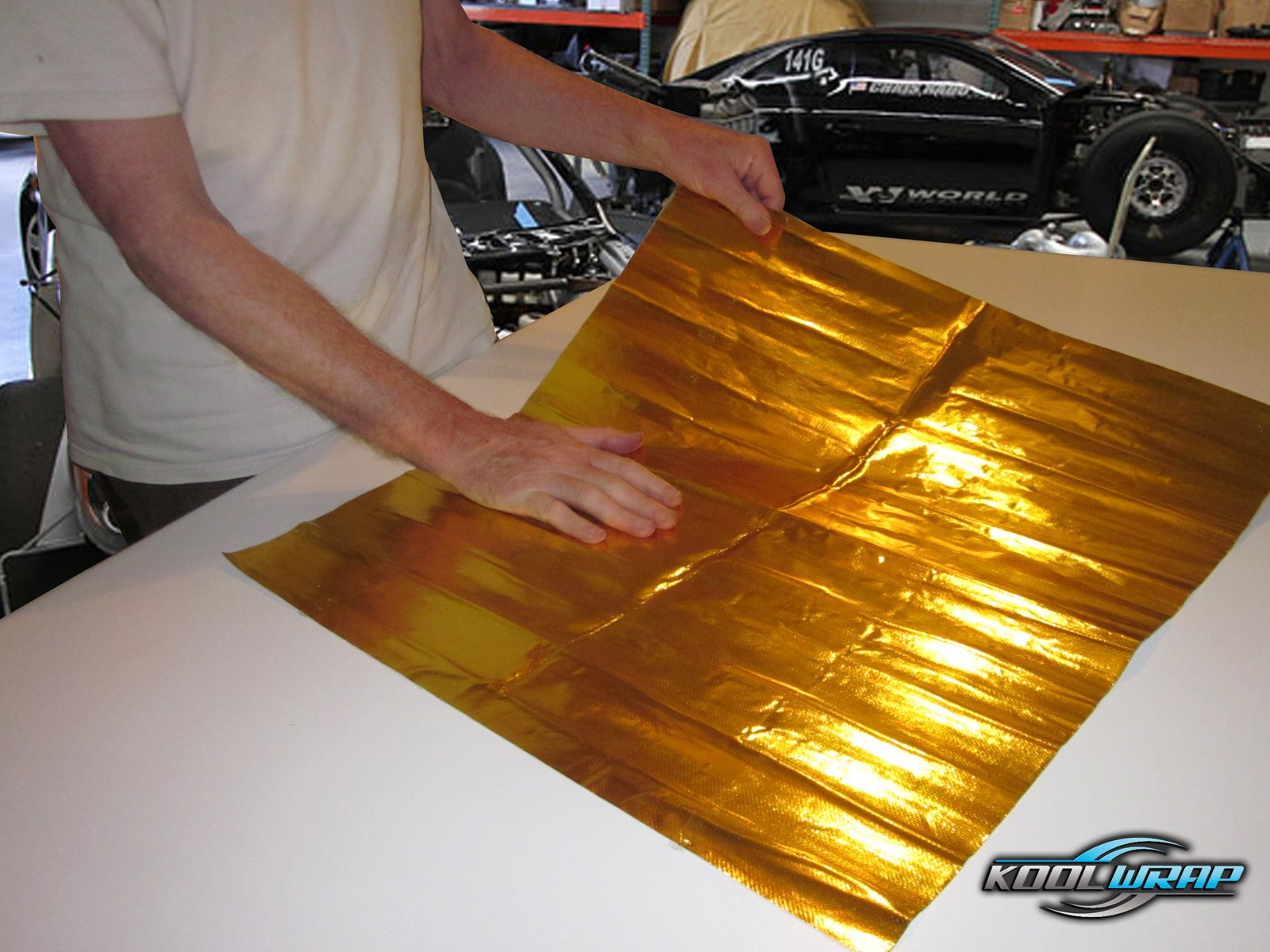
NASA technology has been used to create our Gold Foil Adhesive Heat Shield. A micro thin layer of Gold Coloured Foil is encased in a high temperature polymer and backed by fibreglass and an adhesive backing. Use the Kool Wrap Adhesive Gold Foil Heat Shield to cool intake pipes and protect the underside of a bonnet, firewall or inner panels.
Shop Now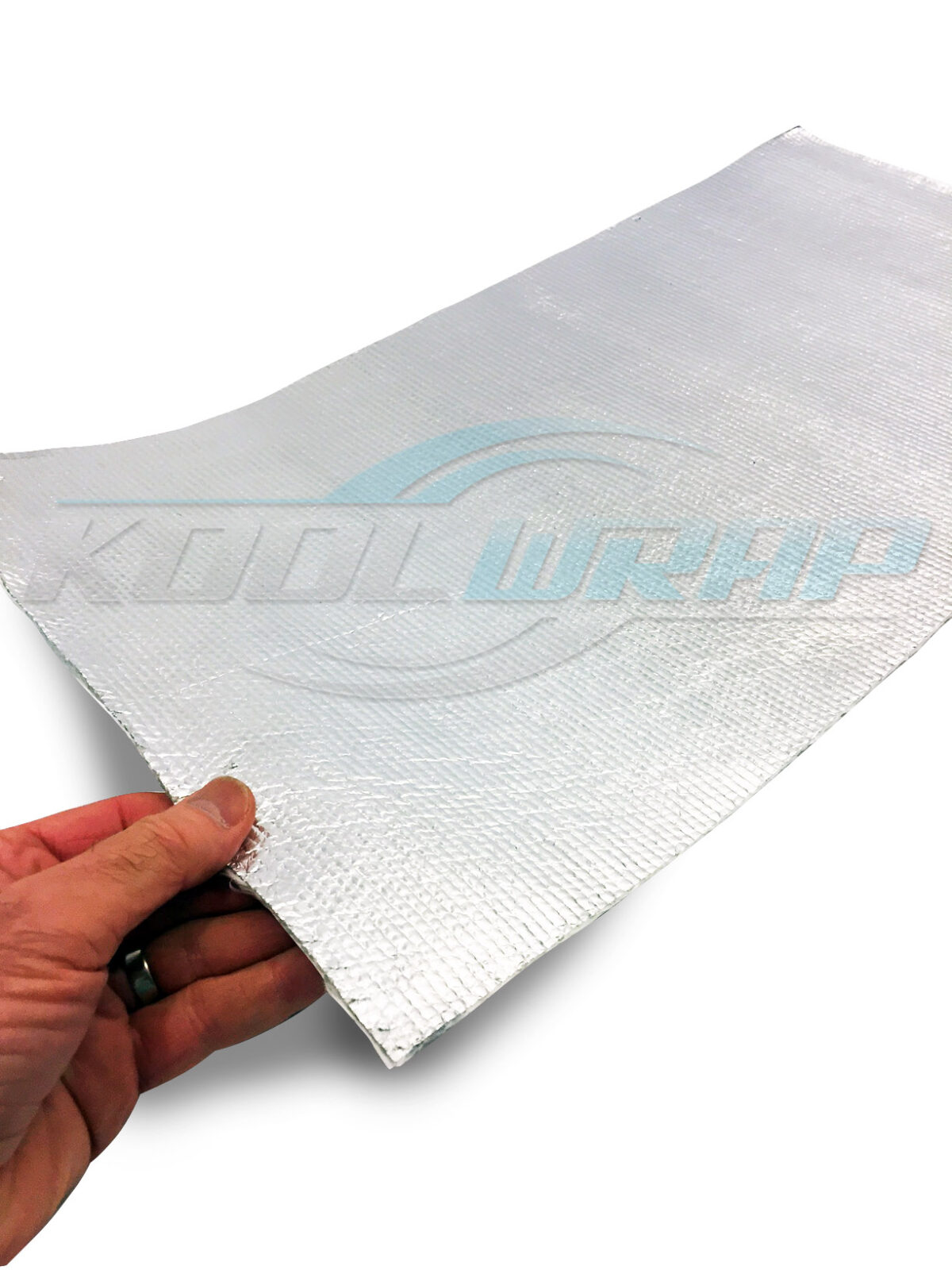
Our Kool Wrap Aluma Shield has become the go to product for car builders, aircraft manufacturers or anyone wanting to reflect maximum heat and provide a heat barrier to protect fuel tanks, the firewall, composite panels, kitchen cupboards or anywhere where heat can potentially cause damage. Available in 3 sizes.
Shop Now
The Aluma Shield II adhesive Heat Shield is 4.0mm thick and you can adhere this sheet material to any surface where excess heat is a problem.
Shop Now The heavy duty Aluma Shield II Heavy Duty has a thicker aluminium foil facing and is perfect under a car where the hot exhaust is heating the floor and making life uncomfortable for the occupants. Can be used for many applications.
Shop Now
The Kool Wrap multi-layer embossed aluminium heat shields are semi- rigid and easy to fold and form to suit your requirements. It is the most effective way to control and manage radiant exhaust heat problems.
These sheets can reduce heat by up to 90%. Easy to cut with tin snips or scissors, simply fold and form edges with a hammer on a square edge.
Shop NowExhausts, turbos and engines throw radiant heat at everything around them. Kool Wrap heat shields put a reflective barrier in the way, so firewalls, floors, fuel tanks, wiring and body panels stay cooler and last longer.
Exhausts, turbos and engines generate radiant heat that can affect nearby panels, floors, fuel tanks, wiring and other components. Kool Wrap’s range of heat shields uses reflective barriers and insulating layers to help protect parts from radiant heat.
Start with two questions. Will the shield stick to the panel you want to protect, or stand off the heat source? And how much space do you have? Adhesive shields bond to the part or panel you’re protecting, such as a firewall, floor or airbox. Semi-rigid shields mount near the heat source itself, such as an exhaust pipe or muffler, with hose clamps or brackets. Thicker adhesive shields insulate more but need more room.
| Type | Construction | Thickness | Stated rating | Sizes | Fixing | Best for |
|---|---|---|---|---|---|---|
| 0.5mm Gold | Gold-coloured reflective foil laminated to fibreglass | 0.5mm | Not published | 60 x 60cm | Self-adhesive, cut with scissors | Airboxes, intakes, tight spaces, firewalls |
| 1.5mm Silver (Aluma Shield) | Heavy duty aluminium foil on 1.5mm fibreglass | 1.5mm | Fibreglass rated to 593°C, foil melting point 650°C | 60 x 30cm, 60 x 60cm, 60cm x 1.2m | Self-adhesive, cut with scissors | Firewalls, fuel tanks, composite panels, engine bays |
| 4mm Silver Light Duty (Aluma Shield II) | 0.05mm embossed aluminium on a fibreglass and polyester core | 4mm | Reflects 95% of radiant heat. Tested 30 hours at 246°C with no failure | 60 x 50cm, 106 x 60cm | Pressure-sensitive adhesive, can be moulded | Floor pans, tunnels, fuel tanks, body panels |
| 5mm Silver Heavy Duty (Aluma Shield II HD) | 0.25mm embossed aluminium on a 5mm fibreglass and polyester core | 5mm | Reflects up to 95% of radiant heat. Tested 30 hours at 246°C with no failure | 60 x 50cm, 100 x 58cm | Pressure-sensitive adhesive, can be moulded | Underfloor above the exhaust, transmission tunnels |
| Embossed semi-rigid | Multi-layer embossed aluminium, 1 to 6 layers | 1.8mm to 3.3mm | Cuts radiant heat by up to 90%. Panels to 650°C, pipe shields 600°C or 1,000°C | Panels 23 x 30cm to 50 x 70cm, pipe shields 300mm and 600mm | No adhesive. Fold, then fix with clamps or brackets | Exhaust pipes, mufflers, underbody, engine bays, farm and industrial machinery |
Adhesive shields go onto a clean, dry surface free of oil and wax. Make a paper template, cut the sheet with scissors, peel the liner, then press from the centre out and roll the edges firmly. Seal cut edges and joins with aluminium foil tape. Never stick an adhesive shield directly onto an exhaust pipe, manifold or turbo housing. Use a semi-rigid shield, exhaust wrap or a turbo blanket there. Our adhesive heat shield installation guide covers each step.
Use 0.5mm gold where space is tight, such as airboxes and intakes. Use 1.5mm silver for firewalls and panels. Use 4mm or 5mm Aluma Shield II for floor pans, tunnels and fuel tanks, and choose the 5mm heavy duty version under the car where the exhaust heats the floor.
Clean and degrease the surface and let it dry. Cut the sheet to a paper template with scissors, peel the liner, and press it on from the centre out. Roll the edges firmly and seal cut edges with aluminium foil tape.
A semi-rigid shield works best mounted with a gap between it and the exhaust, so fix it with clamps or brackets rather than pressing it onto the pipe. An adhesive shield bonds straight onto the panel you’re protecting, because its insulating core does the work.
The 0.5mm gold sheet is thin gold-coloured reflective foil laminated to fibreglass, made for tight spaces. The 1.5mm silver sheet has heavy duty aluminium foil on a thicker 1.5mm fibreglass layer, rated to 593°C at the fibreglass, for more insulation where you have room.
Yes. Cut the adhesive sheets with scissors. Use heavy duty scissors for the 4mm and 5mm sheets, which can be moulded to shape. Fold semi-rigid panels by hand and trim pipe shields with tin snips.
No. Adhesive heat shields are for panels and parts near the heat. On exhaust pipes, manifolds and turbo housings, use a semi-rigid shield with clamps, exhaust wrap or a turbo blanket.