0 items - $0.00
No products in the cart.
Building or restoring a car is a labor of love for car builders. Whether you’re crafting a high-performance vehicle or restoring a classic car, every detail matters. Among the essential components car builders must consider are exhaust wraps, heat shields, and sound deadeners. These products not only enhance the performance of the vehicle but also improve safety, comfort, and longevity.
Exhaust wrap is a must-have for any serious car builder, especially those working with high-performance or modified vehicles. This specialized material is designed to wrap around the exhaust headers, helping to reduce heat buildup in the engine bay. By keeping exhaust heat contained, exhaust wraps help the engine run cooler, which can lead to better overall performance.
A cooler engine means improved horsepower and a more efficient fuel burn. Exhaust wrap also helps protect nearby components, such as wiring and hoses, from heat damage. This is particularly important for car builders who are packing high-performance parts into tight spaces where heat can be an issue.
For builders working on turbocharged or racing vehicles, exhaust wraps are an absolute necessity. They reduce heat soak, helping to maintain a steady flow of exhaust gases, which can improve turbo spool time and overall engine efficiency.
While exhaust wraps focus on containing heat, heat shields are designed to deflect heat away from critical areas of the car. Heat shields are often used around the engine, transmission, or near sensitive electronics to prevent heat from causing damage.
Car builders can use heat shields to extend the life of their components by preventing overheating. Over time, heat can degrade materials, cause electrical issues, and even lead to dangerous situations like fires. By installing heat shields, builders can protect vital components and improve the reliability of their builds.
At Kool Wrap Heat Protection, we offer a wide range of heat shields designed for different applications. Whether you need a simple barrier for your exhaust system or a complex heat shield for your engine bay, our products are built to withstand extreme temperatures and provide superior protection.
Another key consideration for car builders is creating a quiet and comfortable cabin. Whether you’re building a luxury vehicle or a high-performance machine, a sound deadener is an essential tool for reducing road noise and vibration.
Sound deadeners work by absorbing vibrations and noise, creating a quieter driving experience. This is particularly important for builders who want to achieve a refined feel in their vehicles. Without sound deadening, engine noise, road vibrations, and even rattles from loose components can make the driving experience uncomfortable.
At Kool Wrap Heat Protection, our sound deadeners are designed to be lightweight yet highly effective. They’re perfect for any type of build, from hot rods to everyday drivers. With easy installation and long-lasting performance, our sound deadeners can help transform your vehicle into a quiet, comfortable space.
At Kool Wrap Heat Protection, we specialize in high-quality products that make car building easier and more effective. Our exhaust wraps, heat shields, and sound deadeners are trusted by car builders across Australia for their durability and performance. Whether you’re building a street machine, a race car, or restoring a classic, we have the heat protection solutions you need.
We understand that every build is unique, which is why we offer a variety of products to suit different needs. From heavy-duty exhaust wraps to lightweight sound deadeners, Kool Wrap has you covered.
For car builders, using the right materials is critical to the success of the build. Exhaust wraps help manage heat in the engine bay, improving performance and protecting vital components. Heat shields offer added protection by deflecting heat away from sensitive areas, while sound deadeners create a quiet, comfortable ride. By incorporating these products into your build, you’ll not only enhance performance but also ensure your vehicle stands the test of time.
Visit Kool Wrap Heat Protection today and find the perfect solutions for your next car build!
How long does exhaust wrap last? Quality exhaust wrap typically lasts 2 to 5 years. Where yours lands in that range comes down to four things. How dry it stays, whether oil or fuel reaches it, how well it was fitted, and how hot the pipe runs compared with the wrap’s rating.
This guide explains what shortens wrap life, how the materials compare, the signs it is time to replace, and how to get more years from the next wrap. You will find ratings and roll sizes for every material in the Kool Wrap exhaust heat wrap range.
Wrap soaks up water from rain, creek crossings, washing and condensation. On a vehicle you drive often and hard, the heat drives that water out. Trouble starts when the wrap stays damp. A weekend car in a cold shed, a 4WD after a river crossing, or a ute that only does short trips never gets the pipe hot for long enough. Water held against mild steel speeds up rust, and the rust then stains the wrap from the inside.
A weeping rocker cover gasket or a messy oil change drips straight onto extractors. Wrap absorbs oil and fuel. Once it is soaked, it smokes and smells every time it heats up, and it becomes a fire risk. Replace oil-soaked wrap straight away and fix the leak first.
Wrap that rubs on a chassis rail, crossmember, engine mount or heat shield wears through. Off-road, rocks and scrub tear at exposed wrap under a 4WD. Wrap near a flex joint gets worked every time the exhaust moves, which is one reason to leave flex joints bare.
Loosely wound wrap moves on the pipe, lets water sit between the turns and frays at the edges. Once a turn lifts, the rest follows. Keep tension even, overlap about 6mm per turn and lock both ends with stainless ties.
Every wrap has a continuous temperature rating. Run a pipe above it for long periods and the fibres break down faster. Turbo systems, race use and heavy towing push more sustained heat through the pipe than highway cruising does.
Wrap does not fail evenly along a system. Check these places first.
| Location | Why it wears | What you will see |
|---|---|---|
| Extractor primaries near the head | Hottest part of the system and closest to oil leaks | Brittle weave, oil staining, discolouration |
| The outside of tight bends | Thinnest coverage and most tension during fitting | Gaps opening between turns, frayed edges |
| Under the car near the floor | Road spray, stone chips and water | Damp wrap, rust bleed, torn edges |
| Where wrap passes a mount or crossmember | Rubbing every time the exhaust moves | A worn line across the weave |
| Mufflers and rear sections | Runs cooler, so water sits in the wrap instead of drying out | Sagging, loose ties, damp patches |
Rear sections and mufflers run cooler than the headers, so water is the main thing that shortens wrap life there rather than heat.
Choose a wrap with headroom above how hot your pipe runs for long periods. A wrap working near its limit on every drive will not last as long as the same wrap running well inside it.
| Wrap | Continuous | Intermittent | Colours |
|---|---|---|---|
| Standard fibreglass | 540°C | 980°C | Black, white, natural |
| Vermiculite coated fibreglass | 650°C | 1,090°C | Graphite black |
| Titanium basalt fibre | 980°C | Not published | Natural, black |
The everyday wrap for street cars, bikes and general use. It comes in 25mm and 50mm widths at 1.5mm thick.
Vermiculite coated fibreglass exhaust wrap is fibreglass coated with a vermiculite dispersion. The coating lifts the continuous rating to 650°C, which gives more headroom on hotter street and performance systems. It comes in 50mm width only.
Titanium basalt fibre exhaust wrap is made from basalt, a volcanic rock, spun into fibre. It carries the highest continuous rating in the range at 980°C, and Kool Wrap’s product listing describes it as 25% stronger than regular wraps. Pick it for turbo dump pipes, race cars and industrial pipework.
Check the wrap every time the vehicle is on a hoist or due for an oil change. Replace it if you see any of these:
A new wrap smokes for its first few heat cycles as binders burn off. Smoke after that points to oil or fuel in the wrap.
Most early failures trace back to fitting and moisture. Our guide to whether exhaust wrap can damage extractors explains how to protect the pipe underneath as well as the wrap.
For the full method, including how much wrap to buy and how many ties you need, follow our step-by-step exhaust wrap install guide.
Quality exhaust wrap typically lasts 2 to 5 years. A street car that gets driven regularly and stays dry sits at the top of that range. A weekend car in a damp shed, a 4WD that crosses water, or wrap near an oil leak sits at the bottom.
Replace it when it shows the signs above rather than on a fixed schedule. Inspect it at every service and note the date you fitted it, so you know how old it is.
No. Once wrap has been through heat cycles it is brittle, and unwinding it damages the weave. The stainless ties cannot be reused either, because you cut them to remove them.
It can. A car that sits gets condensation on the pipes and never runs hot enough to dry the wrap out. That is the single most common reason wrap fails early on a weekend car.
Light smoke over the first few heat cycles is binders burning off and it clears. Smoke that keeps going, or smells of burnt oil or fuel, means something has soaked into the wrap or an exhaust leak is blowing onto it. Find the source before you keep driving.
Not sure whether your wrap is due, or which material will last longer on your setup? Send Kool Wrap a photo or call 1300 44 33 34. Replacement rolls in all three materials are in the exhaust heat wrap range.
Kool Wrap is a leading manufacturer of high-quality heat protection products, trusted across the automotive, marine, and industrial markets. With a commitment to delivering durable and efficient solutions, Kool Wrap offers a comprehensive range of products, including protective sleeves, heat shields, and insulation materials. Whether you’re looking to protect components in your car, boat, or industrial equipment, Kool Wrap’s innovative products are designed to withstand extreme temperatures while enhancing performance and safety.
Heat is a significant concern across many industries, particularly in environments where engines, exhausts, and other high-performance systems generate intense temperatures. Uncontrolled heat can cause damage to critical components, reduce efficiency, and even lead to dangerous situations such as fires or equipment failure.
Kool Wrap’s heat protection products are engineered to solve these problems by minimizing heat transfer, shielding sensitive parts, and optimizing overall performance. From automotive racing to heavy-duty industrial applications, proper heat management is crucial for safety, longevity, and efficiency.
1. Protective Sleeves
Kool Wrap’s protective sleeves are designed to shield cables, wires, hoses, and other critical components from high temperatures. Made from heat-resistant materials, these sleeves provide a protective barrier that prevents heat from causing degradation or failure. They are ideal for automotive applications where engine components and exhaust systems generate high levels of heat, as well as for industrial and marine uses where insulation is key to ensuring safe and efficient operation.
The flexible design of Kool Wrap protective sleeves allows them to fit snugly around components of various sizes, ensuring complete coverage and long-lasting protection. Available in a range of sizes and materials, these sleeves are tailored to meet the specific needs of different environments and equipment.
2. Heat Shields
Heat shields play a critical role in directing and dissipating heat away from sensitive areas. Kool Wrap’s heat shields are engineered using advanced materials that can handle extreme temperatures, making them ideal for automotive, marine, and industrial applications. Whether you need to protect an engine bay, prevent exhaust heat from damaging nearby components, or shield equipment in a factory, Kool Wrap heat shields provide superior heat deflection and durability.
Designed for easy installation, Kool Wrap’s heat shields are lightweight yet tough enough to withstand the rigors of high-performance environments. They are available in a variety of configurations to suit different applications, ensuring that your equipment remains safe from the damaging effects of heat.
3. Insulation Materials
For comprehensive heat management, Kool Wrap offers a wide range of insulation materials designed to provide maximum thermal protection. These materials can be used to insulate exhaust systems, engine components, industrial machinery, and more. By reducing heat transfer, Kool Wrap insulation helps to improve equipment performance, extend component life, and enhance safety.
Whether you’re insulating a car’s exhaust system to prevent heat from radiating into the cabin, or protecting industrial machinery from heat buildup, Kool Wrap’s insulation materials are up to the task. These materials are easy to install, highly effective, and built to endure extreme conditions.
Kool Wrap is dedicated to providing innovative heat protection products that are both reliable and cost-effective. By using the highest-quality materials and advanced manufacturing processes, Kool Wrap ensures that every product meets the rigorous demands of automotive, marine, and industrial environments.
Performance and Reliability
Kool Wrap’s products are tested to withstand extreme conditions, ensuring that they deliver exceptional performance even in the toughest environments. Whether you’re racing on the track or working with heavy machinery, Kool Wrap’s heat protection solutions are designed to keep your equipment running smoothly and safely.
Wide Range of Applications
With a diverse product lineup, Kool Wrap offers heat protection solutions that can be customized for various industries and applications. From automotive and marine engines to industrial machinery, Kool Wrap products are versatile and adaptable, providing the heat management you need across different sectors.
Commitment to Quality
At Kool Wrap, quality is paramount. Every product is crafted with precision and attention to detail, ensuring that customers receive the highest level of performance and durability. Kool Wrap’s dedication to excellence makes them a trusted partner for those who demand the best in heat protection.
Kool Wrap stands as a leading manufacturer of high-quality heat protection products, offering protective sleeves, heat shields, and insulation materials that are essential for managing heat in automotive, marine, and industrial environments. Whether you need to protect your vehicle’s components, safeguard machinery, or optimize equipment performance, Kool Wrap delivers effective solutions you can trust. Choose Kool Wrap for superior heat protection and ensure your systems operate at peak efficiency, no matter the heat.
At Kool Wrap, we specialize in manufacturing premium heat protection products designed for the automotive, marine, and industrial markets. Our mission is to deliver innovative, reliable, and high-performance solutions that safeguard your equipment and enhance its longevity.
Protective Sleeving: Our durable and flexible sleeving products offer superior protection for cables, hoses, and wires against extreme temperatures and abrasion. They are ideal for automotive and industrial applications, ensuring optimal performance and safety.
Heat Shields: Kool Wrap heat shields are engineered to reflect and dissipate heat efficiently. They are perfect for safeguarding critical components in vehicles, boats, and industrial machinery, reducing the risk of overheating and enhancing operational efficiency.
Insulation Materials: Our top-quality insulation materials are designed to provide excellent thermal management. Whether you need to insulate exhaust systems, fuel lines, or sensitive electronic components, Kool Wrap has the right solution to keep your systems cool and efficient.
Protect your investments and ensure optimal performance with Kool Wrap’s high-quality heat protection products. Explore our extensive range of solutions and discover how we can help you tackle the challenges of heat management with confidence.
Contact us today to learn more about our products or to place an order. Let Kool Wrap be your trusted partner in heat protection.
Exhaust wrap is widely discussed in the automotive world, often surrounded by various myths and misconceptions. As a leading heat shield and exhaust wrap solutions provider, Kool Wrap is here to set the record straight. This blog post addresses and debunks some of the most common misconceptions about exhaust wrap, clarifying its benefits and dispelling misinformation.
Misconception 1: Exhaust Wrap is Only for Aesthetics
One common misconception is that exhaust wrap is solely used for cosmetic purposes, giving vehicles a “cool” look. While it’s true that a well-wrapped exhaust can have an appealing appearance, its benefits go far beyond aesthetics. Exhaust wrap is primarily employed to manage heat. It helps reduce under-hood temperatures, protect nearby components, and improve overall engine performance.
Misconception 2: Exhaust Wrap Causes Corrosion
Some believe wrapping the exhaust can trap moisture and lead to rust or corrosion. However, modern exhaust wrap materials are designed to resist moisture and heat. When correctly installed, they create a barrier that minimises the chance of moisture accumulation, preventing corrosion rather than causing it.
Misconception 3: Exhaust Wrap Decreases Exhaust Life
There’s a notion that exhaust wrap can accelerate wear and tear on the exhaust system due to increased heat retention. In reality, well-engineered exhaust wrap materials are designed to withstand high temperatures. They are often used in racing and high-performance applications precisely to prolong the life of the exhaust by reducing thermal stress.
Misconception 4: Exhaust Wrap Always Leads to Performance Gains
While exhaust wrap can improve performance by reducing heat soak and enhancing exhaust gas flow, it’s not a magic solution that guarantees horsepower gains on every vehicle. The extent of performance improvement can vary based on factors such as the engine’s design, the wrap’s quality, and the vehicle’s overall setup.
Misconception 5: Exhaust Wrap Is Only for Racing Vehicles
Another misconception is that exhaust wrap is exclusive to racing vehicles. While it’s true that race cars often utilise exhaust wrap for performance reasons, it’s equally valuable for regular daily drivers. Exhaust wrap can help prevent heat-related damage, increase fuel efficiency, and even reduce cabin heat, making it beneficial for all types of vehicles.
Benefits of Exhaust Wrap
Heat Management: Exhaust wrap effectively reduces under-hood temperatures, leading to improved engine performance, reduced heat-related issues, and enhanced overall reliability.
Protection: By shielding nearby components from excessive heat, exhaust wrap prevents potential damage and extends the life of various parts.
Performance Enhancement: While not a guaranteed horsepower boost, exhaust wrap can improve exhaust gas flow, contributing to a smoother-running engine.
Fuel Efficiency: Cooler air entering the engine bay can improve fuel combustion efficiency, potentially leading to better fuel mileage.
Cabin Comfort: Lower under-hood temperatures translate to cooler cabin interiors, making your driving experience more comfortable.
Conclusion
Exhaust wrap is a practical and beneficial solution that extends beyond aesthetics. It manages heat, protects components, and enhances vehicle performance. By addressing and debunking common misconceptions, we hope to clarify the advantages of using exhaust wrap. At Kool Wrap, we offer high-quality heat shield and exhaust wrap products to help you make informed decisions for your vehicle’s well-being and performance.
It holds heat inside the turbine housing so less of that heat radiates into the engine bay. A turbo blanket is an insulated cover that wraps around the hot side of your turbocharger, and that one job protects the parts around the turbo and cuts the heat soak that follows a hard run or a long tow.
This guide explains how a blanket works, the pros and cons, how it compares with a turbo heat shield, and who gets the most from one. If you already know you want one, compare the options in our turbo blanket range.
Some people call it a turbo beanie or a turbo jacket. It is a shaped, multi-layer cover that fits over the turbine housing, the side of the turbo that exhaust gas flows through. Stainless steel springs hold it in place, so it comes off when you need to service the turbo.
A Kool Wrap turbo blanket is built in layers:
| Pros | Cons |
|---|---|
| Less radiant heat reaching hoses, wiring, sensors and plastics | The turbine housing itself runs hotter, which is how it works |
| Cooler intake and intercooler piping running past the turbo | The housing stays hot longer after shutdown |
| Less heat soak after a hard run or a long tow | Oil or fuel soaking into the insulation ruins it and becomes a fire risk |
| Covers the turbo surfaces a split fuel or hydraulic line could spray onto | It only covers the turbo. The manifold and dump pipe still radiate heat |
| Comes off with the springs when the turbo needs servicing | The wrong size or wastegate type leaves gaps or fouls the actuator |
| Suits engines from a WRX to a CAT C15 | It is a heat control part, not a power part |
The rest of this guide works through each of these.
The turbine housing is one of the hottest parts under your bonnet. Exhaust gas flows straight from the manifold into it, and the housing radiates that heat in every direction.
Radiant heat travels in straight lines, like the heat you feel on your face from a campfire. Anything with a line of sight to the housing soaks it up. That includes hoses, wiring looms, the intake pipe, intercooler piping, the bonnet and the firewall.
A blanket puts a thick layer of insulation between the housing and everything around it. Heat stays in the housing and the exhaust gas instead of spreading through the bay. The housing runs hotter under the blanket. The parts around it run cooler.
Less radiant heat from the turbo means a cooler engine bay. You notice this most in tight bays where the turbo sits close to the firewall, the bonnet or a strut tower.
Rubber hoses harden and crack after repeated heat cycles. Wiring insulation turns brittle. Plastic connectors and intake parts soften and warp. Keeping heat in the housing slows that damage, especially on oil and coolant lines, boost and vacuum hoses, and sensor wiring routed near the turbo.
Intake pipes and intercooler piping often run right past the turbine housing. When those pipes absorb radiant heat, the air inside them warms up before it reaches the engine. A blanket cuts the heat those pipes pick up.
Heat soak hits when you stop after a hard drive or a long tow. Airflow through the bay stops, but the turbo is still hot. With a blanket fitted, the heat stored in the housing escapes into the bay more slowly, so nearby parts get less of it.
On trucks, earthmovers and mining gear, a split hydraulic or fuel line can spray onto a hot turbo. A blanket covers the turbo surfaces most likely to ignite a leak. Our CAT C15 blanket is listed as approved for use on all work sites, including mining and tunnel work.
A blanket keeps heat in the turbine housing and the exhaust gas instead of letting it warm the engine bay. Fit one for heat control and component protection, not for extra power.
Both control turbo heat. They do it differently, and plenty of builds use both.
A turbo blanket wraps the turbine housing itself and holds heat inside it. A turbo heat shield sits between the turbo and the part you are protecting, and reflects radiant heat away from it. One insulates the source. The other blocks the path.
| Turbo blanket | Turbo heat shield | |
|---|---|---|
| Where it goes | Directly on the turbine housing | Between the turbo and the part you are protecting |
| How it fixes heat | Insulates, so heat stays in the housing | Reflects radiant heat off the part behind it |
| What it is | Multi-layer fabric with a silica core and stainless mesh | Embossed aluminium panels, single layer 1.8mm up to six layers at 3.3mm |
| How it fits | Stainless steel springs | Brackets or hose clamps on the semi-rigid and pipe shields. Kool Wrap also makes adhesive shields for panels |
| Coverage | The whole hot side of the turbo | The part or area you aim it at |
| Rating | Titanium basalt rated over 1,000°C continuous | DCI pipe shields rated 600°C or 1,000°C, panels to 650°C |
| Oil and fuel | The glass-fibre insulation can absorb a leak, and a soaked blanket must be replaced. The silicone coated outer resists oil and fuel | Not stated |
| Comes off for servicing | Yes, unhook the springs | Yes, unclamp it |
| Best when | You want the whole bay cooler and the turbo protected | You want to protect one specific part, or the turbo works somewhere oily |
Choose a blanket when you want the whole engine bay to run cooler, when the turbo sits close to hoses and wiring on every side, or when a leak spraying onto a hot turbo is the risk you are managing.
Choose a shield when the problem is one specific part, such as a bonnet, a brake line or a master cylinder cooking next to the turbo, or when the turbo works in an environment so oily that a fabric blanket would soak up a leak.
Use both when the turbo is hot enough and packed in tight enough that neither alone is doing the job. Shop embossed semi-rigid heat shields or the turbo blanket range.
Turbo blankets do their job well. They do not fix everything, so know the limits before you buy.
All three use a silica insulation core and a stainless steel mesh inner. The outer layer is what changes.
Turbine housings vary a lot, and model lists overlap between sizes. Before you order, follow our guide on how to measure your turbo for a turbo blanket. When it arrives, our step-by-step guide on how to fit a turbo blanket covers spring fitting, clearance checks and the first heat cycle.
It holds heat inside the turbine housing so less of it radiates into the engine bay. That protects the hoses, wiring, sensors and piping around the turbo, keeps intake air cooler in a tight bay, and reduces heat soak after you switch off.
Yes, at the job they are designed for, which is keeping radiant heat off the parts around the turbo. They do not add power, they do not fix an engine bay with nowhere for hot air to go, and they do not cover the manifold or dump pipe.
They are worth it if you can name the heat problem you are solving. A tight engine bay, hoses and wiring hardening near the turbo, heat soak after towing, or a fire risk from a leak on a work site are all good reasons. If none of those apply, the money is better spent elsewhere.
Kool Wrap blankets use three layers. A heat-resistant outer of titanium basalt, silicone-coated fibreglass or carbon fibre, a 12mm silica insulation core in the titanium basalt and silicone coated ranges, and a stainless steel mesh inner layer against the housing. Titanium basalt and silicone coated models use Kevlar-reinforced stitching.
Neither is better. A blanket insulates the turbo itself and cools the whole area around it. A shield reflects heat away from one specific part. Pick a blanket for general bay heat, a shield to protect one component or where oil would soak a blanket, and both when the turbo runs hot in a tight space.
We would not. A blanket has to hold its shape on a turbine housing under sustained exhaust heat, take spring tension without tearing, and keep its insulation out of the wastegate linkage. Home-made covers made from wrap or matting come loose, foul the actuator, or absorb oil and become a fire risk. A properly shaped blanket comes with springs and fitting instructions.
No. The turbine housing is built to run hot, and the blanket keeps that heat where it belongs. What does cause damage is a poor fit that fouls the wastegate actuator, or a blanket that has soaked up oil from a leak. Fix leaks first and check the wastegate moves freely after fitting.
Browse Kool Wrap turbo blankets or call us on 1300 44 33 34 with your engine, turbo model and a photo of the turbine housing. We keep standard designs and can modify them or custom-make a blanket for larger turbos.
While you read the word “heat shield”, it’s pretty obvious that you can easily understand its meaning. Indeed, a heat shield is a type of barrier that a device needs against heat. We use heat shields in every area where we need to control heat.
There is another type of heat shield that is known as an insulator. Its job is keeping heat inside. This type of heat shield is used in the automotive and industrial sectors. Different materials make heat shields like aluminium, stainless steel, fibreglass, basalt, and silica. You can call a heat shield with the help of the material used, just like an aluminium heat shield.
We need to control the heat in different sectors like:
As a general fact, most factories and power plants machines produce heat. Thus, controlling heat is required due to the risk of damage to electronic parts or the workers’ health.
Heatshield covers, sleeves, curtains, and tape can help keep electronic parts safe and save the worker from fatigue.
An exhaust heat shield is needed in automobiles, motorcycles, and motorboats. Exhaust shields reduce the amount of heat coming from the exhaust system. This protection is essential to make your vehicle optimally powerful and efficient.
Fireplaces in your home may create heat that may damage precious furniture or electrical appliances like TV, refrigerators etc. Thus, a fireplace needs the aluminium heat shield as a heat barrier to protect these delegate items of your home.
Naturally, firearms used in armed forces generate a large amount of heat that may damage military accessories. Moreover, unwanted heat is not good for military persons as well. Thus, heat shields are frequently used in all armed forces like the Navy, air force and Army.
Finally, heat shields are available to protect life and goods from conductive, convective heat. You need to be sure about your objectives before buying a heat shield for your personal or commercial place. Browsing the web is also a good idea to find out the correct heat barrier.
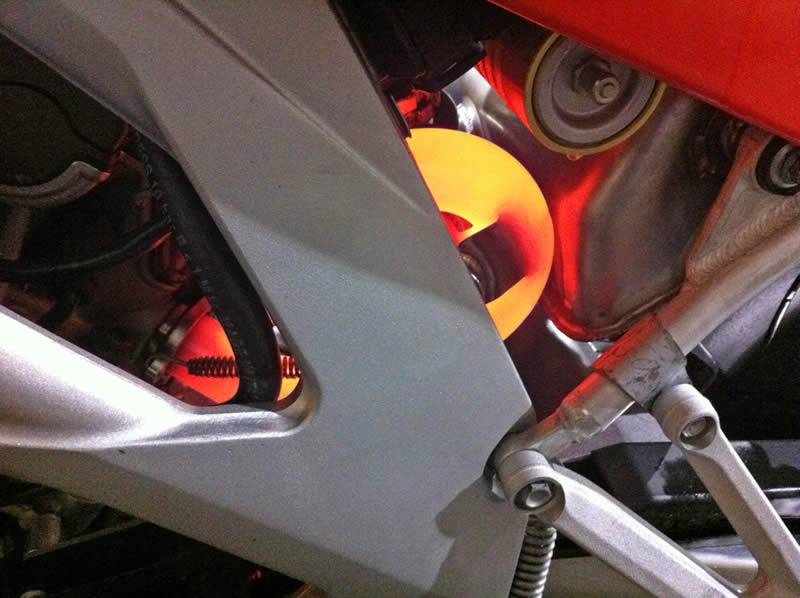
The highest temperatures that an exhaust manifold or exhaust pipe can reach are approximately 850°C (1,600°F).
As a general reference, metals start to turn red at 500°C and glow a dark cherry red at around 635°C (1,175°F).
The hottest parts of your exhaust system are usually:
A bend in the exhaust pipe near the cylinder head
Around the catalytic converter
As RPM or engine load increases, exhaust temperatures naturally rise — this is when the engine burns the most fuel and produces maximum torque or horsepower.
Tests show that for typical road vehicles:
Around 120°C (250°F) at 50 km/h (30 mph)
Up to 550°C (1,020°F) at 112 km/h (70 mph)
There are three main ways to protect nearby components from exhaust heat:
Insulate the exhaust pipe to retain heat within the pipe.
Install a reflective barrier with an air gap between the exhaust pipe and other components.
Add reflective and insulating materials to heat-sensitive parts that may be exposed to radiant exhaust heat.
We typically use exhaust wraps or tapes in a spiral pattern around the exhaust pipe or manifold to trap heat inside.
Tests show that exhaust wraps can reduce engine bay temperatures by up to 50%.
Common exhaust wrap materials include:
Fibreglass (melts around 815°C)
Silica
Basalt
Ceramic wraps
Many modern cars now feature embossed aluminium or steel heat shields to manage heat effectively.
These shields are mounted 1–2 cm away from the exhaust or manifold, allowing airflow through the gap to carry away excess heat.
Heat sleeves are used to protect cables, wires, hoses, and hard lines.
They’re typically made of aluminium foil laminated with fibreglass, offering both reflection and insulation.
Some sleeves use Mylar foil, which combines a thin metallic layer with a polyester resin outer layer and fibreglass insulation.
However, Mylar begins to burn off around 200°C (400°F).
At Kool Wrap, a thicker aluminium foil backed by fibreglass insulation is used, capable of withstanding temperatures up to 660°C (1,220°F).
This material comes in both sleeve and sheet forms, ideal for insulating components like starter motors or firewalls.
Air is an excellent heat insulator when trapped in small pockets.
It’s a poor conductor of heat but works well in convection (as seen in fan heaters).
Products like styrene foam or ceiling insulation batts trap air to block heat transfer — the same principle applies to exhaust wraps and fibreglass or silica blankets.
The air pockets between fibres reduce heat conduction effectively.
A common household example of this effect is double-glazed windows, which use trapped air to create a thermal barrier.
University of Washington: Underhood Surface Temperature Tests – Summary of Published Results