0 items - $0.00
No products in the cart.
A touring build is loud in ways a daily driver is not. You are on corrugations for hours, the back of the vehicle is a steel box with nothing in it, and every drawer, fridge and jerry can has a panel behind it that drums.
Sound deadening fixes the panels. This page covers where it goes in a 4WD, a ute canopy or a wagon, and how much you need.
For heat coming off the engine and exhaust rather than noise, our 4WD and touring heat protection page maps the common touring heat problems to the products that solve them. What sound deadening is and how it works is covered in car sound deadener explained.
A canopy is a large, flat, unsupported steel or aluminium panel with air behind it. Hit a corrugated road and the panel vibrates. The vibration is the noise, and it is amplified by the empty box behind it.
Mass stops it. A sound deadening sheet pressed onto the middle of a panel makes that panel too heavy to ring at the frequency the road is feeding it. You do not need to cover everything. You need mass where the panel is largest and least supported, which is the middle.
| Area | Coverage | Why |
|---|---|---|
| Cabin floor | 100 per cent, under the carpet | The largest panel and the closest to the road |
| Front door skins | The flat inner skin, behind the trim | Closest hard surface to your ear |
| Rear door or tailgate | The flat sections | Usually untreated from the factory |
| Wheel arches, inside the vehicle | The flat faces you can reach | Stone and tyre noise arrives here |
| Wagon rear floor and side panels | Floor fully, side panels in the centre | Large empty panels behind the trim |
| Canopy walls and roof | Sections in the centre of each panel, around 20 to 30 per cent | Edges are already braced by the frame |
| Canopy floor | 100 per cent | Road noise and drawer rumble both come through it |
The 20 to 30 per cent figure on large panels is not a shortcut. Full coverage on a braced panel adds weight for very little gain, and weight matters in a touring build.
Kool Wrap sound deadening sheets are 50 x 32cm, around 2mm thick at 3kg per square metre, with an aluminium top layer. Cut them with scissors, peel and press.
| Job | Pack |
|---|---|
| Four doors | Twelve sheets, roller included |
| Cabin floor and doors | Twenty-four sheets |
| A small canopy or wagon rear | Twenty-four sheets |
| A canopy fit-out with lining over the top | The Small Van and 4WD kit, 3.84 square metres of deadener with 10 square metres of 10mm Van Liner and a free roller |
Kit #1 is the one built for this. The deadener goes on the metal and the Van Liner goes over it, which is the right order and the reason the two are packaged together.
Deadening sheets add mass and stop the drumming. They do not stop the canopy getting hot in the sun.
For that, add foil bubble insulation behind the lining panels, with the joins taped. It is waterproof, it blocks up to 95 per cent of radiant heat, and it needs an air gap in front of it to work, which is exactly what sits behind a lining panel.
Order of work in a canopy: deadener on the bare metal, foil bubble or Van Liner over it, lining panels last.
Glass is the weakest thermal panel in any vehicle. A 4WD parked in the sun takes most of its cabin heat through the windows, and at night the same glass loses it again.
Cut reflective sheet to the shape of each window and make removable panels. Foil bubble insulation is the usual choice because it is 5mm thick, blocks up to 95 per cent of radiant heat, is waterproof and cuts with scissors. Trace the glass onto the sheet, cut slightly oversize, and let the panel wedge itself into the window frame. Foil side out.
For the windows in a canopy or a camper build, the same panels work and can live behind the lining when they are not in use.
Window panels are a heat job, not a noise job. They do nothing for drumming, and sound deadening does nothing for the glass.
Sound deadening handles panels. It does not handle everything.
Strip the interior back to metal first. It is the only time you will have access, and going back later to do a panel you skipped means pulling everything out again.
Do the floor even if you are short on material. It is the panel that pays.
Tell us your vehicle, your canopy and what you are fitting out. Call 1300 44 33 34 or email sales@koolwrap.com.au and we will work out the quantities with you. Kool Wrap has supplied heat and sound protection in Australia since 1995, from our office in Rowville, Victoria, and ships Australia-wide with tracking sent after dispatch.
If you’re into modifying your vehicle for performance or aesthetics, you might have come across exhaust wraps. But the big question is: is exhaust wrap worth it?
The answer depends on what you want the wrap to achieve. Exhaust wrapping can reduce radiant heat around the exhaust, help protect nearby wiring and components, reduce heat entering the cabin or engine bay, and give your exhaust a different look. It also has some drawbacks, particularly moisture retention, installation and ongoing wear.
This guide breaks down the exhaust wrap pros and cons, what exhaust wrap actually does, who benefits most from it, and what to consider before you buy.
Exhaust wrap is a heat-resistant material that you wind around an exhaust pipe. It is usually made from woven fibreglass or basalt fibre and comes in rolls in different widths, materials and temperature ratings.
The main purpose of exhaust wrap is to keep more heat inside the exhaust pipe and reduce the amount of radiant heat released into the surrounding area.
That can be useful when an exhaust runs close to wiring, hoses, plastics, the firewall, cabin floor, fuel lines or other heat-sensitive components.
Kool Wrap supplies exhaust wrap for cars, 4WDs, motorcycles, performance vehicles, marine applications and industrial equipment.
There are several potential benefits of exhaust wrap, particularly when you have a specific heat-management problem to solve.
One of the main reasons for exhaust wrapping is to reduce the radiant heat coming off the pipe.
When an exhaust is wrapped, less heat radiates directly onto nearby components. This can help protect wiring, hoses, sensors, starter motors, plastics and other parts that sit close to hot exhaust components.
This can be particularly useful in tight engine bays where there is limited space between the exhaust and surrounding components.
A wrapped exhaust can reduce the amount of radiant heat released into the engine bay.
This can help reduce heat exposure around sensitive components and may be useful where extractors, headers or other exhaust components sit close to the intake, wiring or other heat-sensitive parts.
The goal is heat management rather than a guaranteed performance increase.
Exhaust systems that run underneath the cabin can transfer significant heat into the floor and transmission tunnel.
Wrapping accessible sections of the exhaust can reduce the radiant heat reaching the surrounding bodywork.
This can be particularly useful in 4WDs, utes, vans and other vehicles where the exhaust runs close to the cabin floor.
For a van exhaust insulation project, for example, exhaust wrap can be one part of a broader heat-management setup. A heat shield on the floor or body panel can also be appropriate depending on where the heat problem occurs.
Exhaust heat can affect components that sit close to the pipe.
Wrapping can help reduce heat exposure around:
The wrap works on the exhaust pipe itself. If the main problem is heat reaching a particular panel, firewall or floor, a dedicated heat shield may be a better solution.
For many vehicle owners, appearance is also part of the decision.
Exhaust wrapping can give headers, extractors and other exhaust sections a uniform finished appearance, particularly where the original pipes are discoloured, stained or showing surface wear.
Kool Wrap offers different materials and finishes, including black, white, natural and graphite black, depending on the product.
The pros and cons of exhaust wrap need to be considered together. While wrapping can solve a genuine heat problem, it is not suitable for every exhaust or application.
One of the main concerns with exhaust wrapping is moisture.
Exhaust wrap can absorb water from rain, washing, condensation and water crossings. If moisture remains against bare mild steel, it can accelerate corrosion.
For mild steel exhaust components, clean the pipe and apply a suitable high-temperature exhaust paint before wrapping. After a wet drive or wash, allow the exhaust to get hot enough to dry the wrap.
Vehicles that regularly cross water or sit for long periods in damp conditions need particular attention.
Wrapping exhaust pipes is not difficult, but it requires patience.
The wrap needs to be installed with firm, even tension and consistent overlap. Bends, brackets and tight spaces can make the job more difficult.
You will generally need:
If you are unsure about the process, follow a proper installation guide before starting.
Exhaust wrap is not a permanent covering.
Quality exhaust wrap typically lasts around 2 to 5 years, depending on the material, temperature, moisture, oil contamination, installation and use.
Signs that your wrap may need replacing include:
If you want to know how long exhaust wrap lasts and what affects its lifespan, it is worth checking the full guide before deciding which material to use.
You may see claims that keeping exhaust gases hotter automatically increases horsepower and torque. That is not a claim we recommend making without testing the specific engine and exhaust system.
Exhaust wrap is primarily a heat-management product.
Keeping heat contained within the exhaust can reduce radiant heat around the pipe and may be useful in applications where surrounding temperatures are a concern. However, there is no universal horsepower increase that can be attributed to exhaust wrap alone.
If your goal is performance, consider the entire exhaust system, engine setup, intake system and tuning rather than treating wrap as a standalone power modification.
If you have been searching for does exhaust tape work, it is important to distinguish exhaust wrap from exhaust repair products.
Exhaust wrap is designed to insulate an exhaust pipe and reduce radiant heat.
An exhaust repair tape is generally intended as a temporary repair or sealing product for damaged exhaust components. It is not a replacement for proper exhaust wrap.
Likewise, an exhaust wrap should not be treated as a permanent repair for a cracked, leaking or damaged exhaust. Repair the exhaust first, then wrap it once the pipe is sound.
No.
You may come across searches for exhaust sound deadening wrap, but exhaust wrap is primarily designed for thermal insulation, not acoustic insulation.
If you are trying to reduce exhaust noise, the appropriate solution depends on the source of the noise and the exhaust system itself. Exhaust wrap should not be selected or marketed as a sound-dampening product.
Header wrap is simply exhaust wrap applied to headers or extractors.
Headers are often wrapped because they generate significant radiant heat and can sit close to sensitive components in a compact engine bay.
Before wrapping headers, inspect them for cracks, rust and leaks. Mild steel headers should be properly cleaned and painted before wrapping.
If you are concerned about whether wrapping can affect your headers, read our guide on whether exhaust wrap can damage extractors or headers.
Exhaust wrapping can be useful when you have a specific heat problem to solve.
Turbo systems, extractors and performance exhausts can generate significant heat in a compact engine bay.
Wrapping selected exhaust sections can help reduce radiant heat reaching nearby components.
A 4WD or ute may have exhaust components running close to the cabin, fuel system, wiring or underbody components.
Exhaust wrap can form part of a broader heat-management setup, particularly where floor or transmission tunnel temperatures are noticeable.
For van exhaust insulation, wrapping the exhaust can help reduce radiant heat from sections running close to the cabin or bodywork.
Where heat is reaching the interior through a body panel, combine exhaust wrap with a suitable heat shield on the panel itself.
Motorcycle headers often run close to the rider’s leg, boot, fairings and wiring.
Exhaust wrap can reduce radiant heat in these areas. For bike-specific material choices, measurements and installation instructions, see our motorcycle exhaust wrap guide.
Exhaust wrap is not automatically the right answer for every exhaust system.
Think carefully about wrapping if:
Fix exhaust problems before wrapping them. Wrap should manage heat, not hide an existing mechanical problem.
A few installation practices can make a significant difference.
For the complete installation process, follow our step-by-step exhaust wrap install guide.
The main exhaust wrapping pros and cons come down to what you are trying to achieve.
Pros:
Cons:
Is exhaust wrap worth it? It depends on your application and what you want it to achieve. If you have a specific heat problem around your exhaust, such as a hot cabin floor, wiring close to the headers or excessive radiant heat around an engine bay, exhaust wrap can be a useful heat-management solution.
If you have no particular heat problem, the main reason to use it may simply be appearance.
The main exhaust wrap pros and cons are straightforward. Wrap can reduce radiant heat and protect nearby components, but it can also retain moisture, wear over time and make the underlying exhaust harder to inspect.
Exhaust wrap should not be treated as a guaranteed horsepower modification. It is primarily designed to manage radiant heat around the exhaust. Any performance effect depends on the specific engine, exhaust system and operating conditions.
If you mean exhaust repair tape, it is different from exhaust wrap. Repair tape is generally used for temporary exhaust repairs, while exhaust wrap is designed for thermal insulation. Exhaust wrap should not be used to repair a cracked or leaking exhaust.
Quality exhaust wrap typically lasts around 2 to 5 years, depending on heat, moisture, contamination, installation and vehicle use. Regular inspection can help identify when it needs replacing.
Exhaust wrap does not create rust by itself, but it can hold moisture against the pipe. On bare mild steel, that moisture can accelerate corrosion. Proper preparation, high-temperature paint and keeping the wrap dry can reduce the risk.
If you are asking whether exhaust wrap is worth the cost, the answer depends on the heat problem you are trying to solve. The value comes from heat management, component protection and the finish you want, rather than a guaranteed performance gain.
If you’ve got exhaust heat reaching wiring, hoses, body panels, the cabin floor or other sensitive components, wrap may help reduce the radiant heat coming from the pipe.
However, if the heat is mainly reaching a specific panel or surface, a dedicated heat shield may be more appropriate. The right solution depends on where the heat is coming from and what you are trying to protect.
So, is exhaust wrap worth it?
For the right application, it can be a practical way to manage radiant exhaust heat, protect nearby components and change the appearance of your exhaust system.
The key is to understand what exhaust wrap can and cannot do. It is a heat-management product, not a guaranteed horsepower upgrade, exhaust repair product or sound-deadening material.
If you decide to wrap your exhaust, choose a material suitable for the operating temperature, prepare the pipe properly and follow the installation process carefully.
Browse the Kool Wrap exhaust wrap range or contact Kool Wrap on 1300 44 33 34 if you need help choosing the right material for your application.
Kool Wrap is a leading manufacturer of high-quality heat protection products, trusted across the automotive, marine, and industrial markets. With a commitment to delivering durable and efficient solutions, Kool Wrap offers a comprehensive range of products, including protective sleeves, heat shields, and insulation materials. Whether you’re looking to protect components in your car, boat, or industrial equipment, Kool Wrap’s innovative products are designed to withstand extreme temperatures while enhancing performance and safety.
Heat is a significant concern across many industries, particularly in environments where engines, exhausts, and other high-performance systems generate intense temperatures. Uncontrolled heat can cause damage to critical components, reduce efficiency, and even lead to dangerous situations such as fires or equipment failure.
Kool Wrap’s heat protection products are engineered to solve these problems by minimizing heat transfer, shielding sensitive parts, and optimizing overall performance. From automotive racing to heavy-duty industrial applications, proper heat management is crucial for safety, longevity, and efficiency.
1. Protective Sleeves
Kool Wrap’s protective sleeves are designed to shield cables, wires, hoses, and other critical components from high temperatures. Made from heat-resistant materials, these sleeves provide a protective barrier that prevents heat from causing degradation or failure. They are ideal for automotive applications where engine components and exhaust systems generate high levels of heat, as well as for industrial and marine uses where insulation is key to ensuring safe and efficient operation.
The flexible design of Kool Wrap protective sleeves allows them to fit snugly around components of various sizes, ensuring complete coverage and long-lasting protection. Available in a range of sizes and materials, these sleeves are tailored to meet the specific needs of different environments and equipment.
2. Heat Shields
Heat shields play a critical role in directing and dissipating heat away from sensitive areas. Kool Wrap’s heat shields are engineered using advanced materials that can handle extreme temperatures, making them ideal for automotive, marine, and industrial applications. Whether you need to protect an engine bay, prevent exhaust heat from damaging nearby components, or shield equipment in a factory, Kool Wrap heat shields provide superior heat deflection and durability.
Designed for easy installation, Kool Wrap’s heat shields are lightweight yet tough enough to withstand the rigors of high-performance environments. They are available in a variety of configurations to suit different applications, ensuring that your equipment remains safe from the damaging effects of heat.
3. Insulation Materials
For comprehensive heat management, Kool Wrap offers a wide range of insulation materials designed to provide maximum thermal protection. These materials can be used to insulate exhaust systems, engine components, industrial machinery, and more. By reducing heat transfer, Kool Wrap insulation helps to improve equipment performance, extend component life, and enhance safety.
Whether you’re insulating a car’s exhaust system to prevent heat from radiating into the cabin, or protecting industrial machinery from heat buildup, Kool Wrap’s insulation materials are up to the task. These materials are easy to install, highly effective, and built to endure extreme conditions.
Kool Wrap is dedicated to providing innovative heat protection products that are both reliable and cost-effective. By using the highest-quality materials and advanced manufacturing processes, Kool Wrap ensures that every product meets the rigorous demands of automotive, marine, and industrial environments.
Performance and Reliability
Kool Wrap’s products are tested to withstand extreme conditions, ensuring that they deliver exceptional performance even in the toughest environments. Whether you’re racing on the track or working with heavy machinery, Kool Wrap’s heat protection solutions are designed to keep your equipment running smoothly and safely.
Wide Range of Applications
With a diverse product lineup, Kool Wrap offers heat protection solutions that can be customized for various industries and applications. From automotive and marine engines to industrial machinery, Kool Wrap products are versatile and adaptable, providing the heat management you need across different sectors.
Commitment to Quality
At Kool Wrap, quality is paramount. Every product is crafted with precision and attention to detail, ensuring that customers receive the highest level of performance and durability. Kool Wrap’s dedication to excellence makes them a trusted partner for those who demand the best in heat protection.
Kool Wrap stands as a leading manufacturer of high-quality heat protection products, offering protective sleeves, heat shields, and insulation materials that are essential for managing heat in automotive, marine, and industrial environments. Whether you need to protect your vehicle’s components, safeguard machinery, or optimize equipment performance, Kool Wrap delivers effective solutions you can trust. Choose Kool Wrap for superior heat protection and ensure your systems operate at peak efficiency, no matter the heat.
For anyone dealing with high-performance vehicles or industrial machinery, keeping heat-sensitive components secure and functional is a top priority. Stainless steel tie straps offer a dependable solution for fastening heat wraps and exhaust systems. Their strength, resilience, and heat tolerance make them the ultimate choice for professionals and enthusiasts who demand reliability under extreme conditions.
The Role of Heat Wraps and Exhaust Systems
Heat wraps are used to manage temperatures in exhaust systems by reducing heat transfer and improving efficiency. A secure installation ensures the wrap stays in place, providing maximum thermal insulation and protecting nearby components from excessive heat exposure. Stainless steel tie straps are crucial for achieving this secure installation, offering superior grip and longevity.
How Stainless Steel Tie Straps Outperform Alternatives
Applications Beyond Heat Wraps and Exhaust Systems
While their primary use is securing heat wraps, stainless steel tie straps are versatile enough for a wide range of applications. They are frequently used in industrial settings to bundle wires, secure insulation, or fasten components exposed to extreme temperatures and conditions.
Why Stainless Steel Tie Straps Are Essential
Whether you’re upgrading a race car or maintaining heavy-duty machinery, the performance of your heat wrap and exhaust system relies on secure fastening. Stainless steel tie straps provide a reliable, long-lasting solution that ensures safety, efficiency, and durability.
When it comes to securing heat wraps and exhaust systems, stainless steel tie straps stand out as the ultimate choice. Their unparalleled heat resistance, durability, and versatility make them an indispensable tool for any high-heat application. Trust stainless steel tie straps to keep your components secure and operating efficiently, even in the most demanding environments.
Automobiles without insulation are as good as tiny moving metal rooms. It can take you to your desired destination, but it does not mean you will arrive at your stop comfortably.
Make your car rides more convenient by investing in high-quality insulation solutions. It helps make your journey more peaceful and temperature-controlled.
You are guaranteed maximum comfort after installing insulation foam in your vehicle.
However, today’s technological advancements make it complicated to choose the best foil foam insulation in the market.
Keep this information in mind to determine which works best for you and your vehicle.
This product is basically a low-density elastic polymer or elastomer. It offers a thermal barrier all over a component or in the middle of a heat or cold source and interior space.
Consider foam foil insulation products as the improved and modern alternatives for traditional options like cellulose or mineral wool. It is also safer to use than formaldehyde insulation.
Foam insulation commonly comes in the form of spray-on foams, pre-moulded custom shapes, and rigid foam panels.
You may choose which type of foam to install in your vehicle from these options:
These foams feature interconnected sealed pores or cells, making it impossible for moisture to seep through.
This is ideal if you want an effective sound barrier with a higher R-value.
This type comes with interconnected pores or cells that are partially open. It can reduce the noise that passes through.
It is also an ideal option if you are looking for a solid air and thermal barrier. There may be better choices if you want something to repel moisture.
Flexible foams come with impact-absorbing foams that can bend or flex without cracking.
It comes with a skeletal matrix that provides minimal flexibility.
This option has a more open structure with a skeletal matrix featuring a network of interconnecting strands.
Foam insulation products offer practical solutions for common issues like temperature and noise control.
It serves as a heat insulator – solving a couple of problems, including:
This product helps the vehicle reduce the effects of the sun during hot summer days.
It can also ensure that the heat remains on your vehicle during the winter.
Products like pipe insulation foam tubes serve as thermal barriers to help car engines exhaust heat from the floorboards and firewall.
It can also shield the vehicle from the heat coming from the cabin compartment to make your ride more comfortable.
You need to find these qualities if you’re investing in high-quality foam insulation.
Reliable foam insulation should come with an MPET reflective film or aluminium foil laminate.
It will serve as the outer skin of the product to make it durable and enhance its ability to reflect heat.
Always look for insulation products with fire-retardant additives and a self-extinguishing feature.
It boosts your vehicle’s protection against fire due to high heat.
Your insulation product must feature a pressure-sensitive adhesive to make it easier to install in metal sheets and hard-to-reach areas like air ducts.
It will be easier to install your foam insulators and foam tubing products on walls and roofs if they are lightweight and flexible.
The best insulation product for your vehicle should be able to withstand external factors like chemicals and acids.
It must also resist high temperatures and repel dust to prevent faster wear and tear.
The qualities of foam insulation also vary for soundproofing. The best ones for automotive sound deadening should come in any of these materials:
This material comes in a liquid form. It is highly effective in decreasing sound vibrations.
It is a highly durable, odourless synthetic rubber material that helps boost the insulator’s elastomeric properties.
Most foam insulation, like the spray foam type made with polyurethane, can last for years. It can tolerate extreme changes in temperature, mould and mildew buildup, and excess moisture.
Learning all this information can help your vehicle withstand extreme temperature changes as well as filter unwanted noise.
Investing in high-quality foam insulators is a must for adequate vehicle insulation.
Exhaust wrap installation provides several benefits, be it a race car or the regular ones. You can steer away from potential problems if you can control or reduce the radiated heat from your exhaust system.
It is important to address the myths of using an exhaust wrap before elaborating further on its benefits. Exhaust wrap does not destroy exhaust pipes and headers. Its function is to maintain the heat in the said parts. Hence, the benefits listed below.
This is beneficial especially for the racers. Rounds at the pitstop don’t provide the liberty to cool everything off first. Servicing and refueling must be done in a short amount of time. Applying exhaust heat wrap reduces the risk of getting accidental burns on a hot pipe while doing repairs.
Heat exposure is considered a big factor in a vehicle’s wear and tear. Fluids, rubber and plastic materials are on the receiving end of its negative effects. Installing an exhaust wrap significantly reduces the amount of heat from the exhaust system – avoiding nearby parts from being saturated.
Constant heat exposure will lead to brittle plastic wiring plugs and fittings. It will also be good for brake and fluid lines to be exposed to less heat as it lessens the heat transferred to the liquid through its metal parts. Rubber hoses and lines will be more reliable too.
The exhaust headers’ finish can become visually unpleasant due to so much heat exposure. It doesn’t suit well in a clean engine compartment. Using an insulation wrap on pipes gives it a more pleasing look – especially for aged parts or manifolds.
The radiated heat from the exhaust can also affect the vehicle’s floorboards and firewall. It is conducted through the panels and straight into the interior. All vehicles may have some heat insulation capabilities but its effectiveness may vary.
Race cars don’t have any insulation to prevent the heat from getting inside. Installing exhaust wraps on headers and pipes will reduce the amount of radiated heat from the system. Firewall and floors remain cooler as the heat cannot transit through to the interior.
The heat insulation benefits of using exhaust wraps increases the exhaust gas temperatures (EGTs) inside the headers and pipes. More EGTs result in an increase in exhaust gas velocities – improving the amount of exhaust gasses being spent from its combustion chambers. The said EGTs also reduce spool time and turbo lag for that faster maximum boost of turbocharged cars.
Lower underhood temperature is also one key benefit. Exhaust wraps help to reduce the air temperature intake as well as the cooler air infiltrating the engine. The effect is outstanding, more so for engines with open-element air cleaner systems.
An engine is specifically designed to work at an ideal temperature. It will perform on its peak power with cooler intake temperatures. There are instances that the car’s cooling system is not enough to maintain the required optimum temperature. This will result in a drastic reduction in power and efficiency due to the engine’s continuous heat exposure.
Too much heat will also strain engine components that are not designed to work on extreme temperatures. Applying an exhaust wrap protects these parts by keeping in most of the heat and not letting it through the engine bay.
It is also vital to be aware of a few drawbacks of using exhaust wrap after discussing its benefits. The biggest concern would be in winter time as the engine may take longer to warm up.
It can also trap moisture as water also has its share of negative impact on metals. It can be negated by using quality aluminum or stainless steel but exhausts from such materials can be pricey.
It can also be a hassle in wrapping your headers and pipes with an exhaust wrap. You can consider it as your DIY project but it’s best to be handled by professionals. This job fully requires attention to details. The tape should be wrapped tightly and the surface to be wrapped should be clean – no rust, dirt or oil.
It is not just about awesome-looking headers. Applying quality exhaust wrap will provide you more horsepower for your car due to the reduction in temperatures. It will keep the heat in the headers and not disperse it to the other parts of the engine.
Kool Wrap offers the best range of heat protection products. Our excellent exhaust wrap products can guarantee the containment of heat within the exhaust system. It is the reason why we are the most trusted brand by most car enthusiasts in Australia.
Our staff are all car aficionados knowledgeable to discuss your requirements.
Diesel Heaters have become a popular addition to many Caravans and Camper Vans, especially during the colder months.
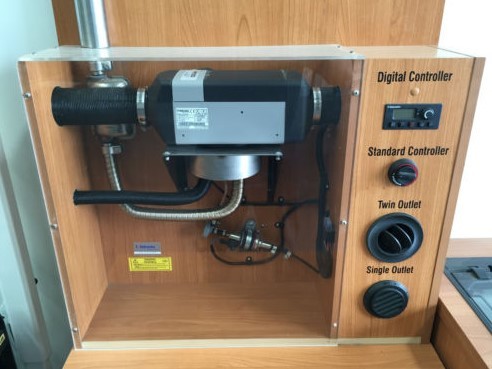
They don’t use much electricity and they are easier to install than LPG heaters. Diesel is also very easy to buy no matter how isolated you are, and you don’t burn up your precious LPG.
But the diesel heater exhaust pipe can get super hot and damage cupboards and flooring if you are not careful.
Kool Wrap has been contacted by many owners wanting to install their Diesel Heaters and are concerned about this excessive heat. They want to insulate the exhaust pipe as it travels out of the van through cupboards, walls or the floor.
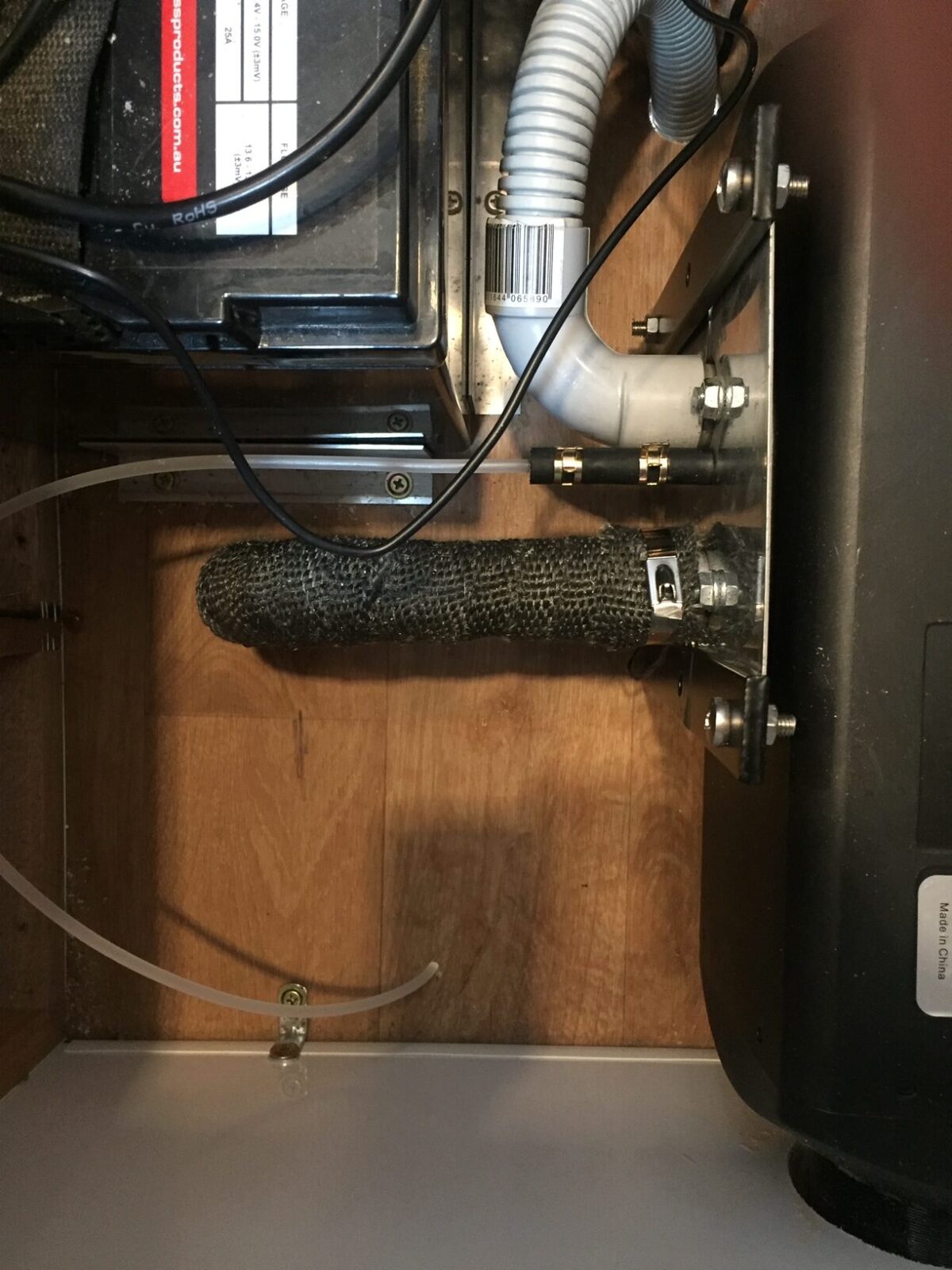
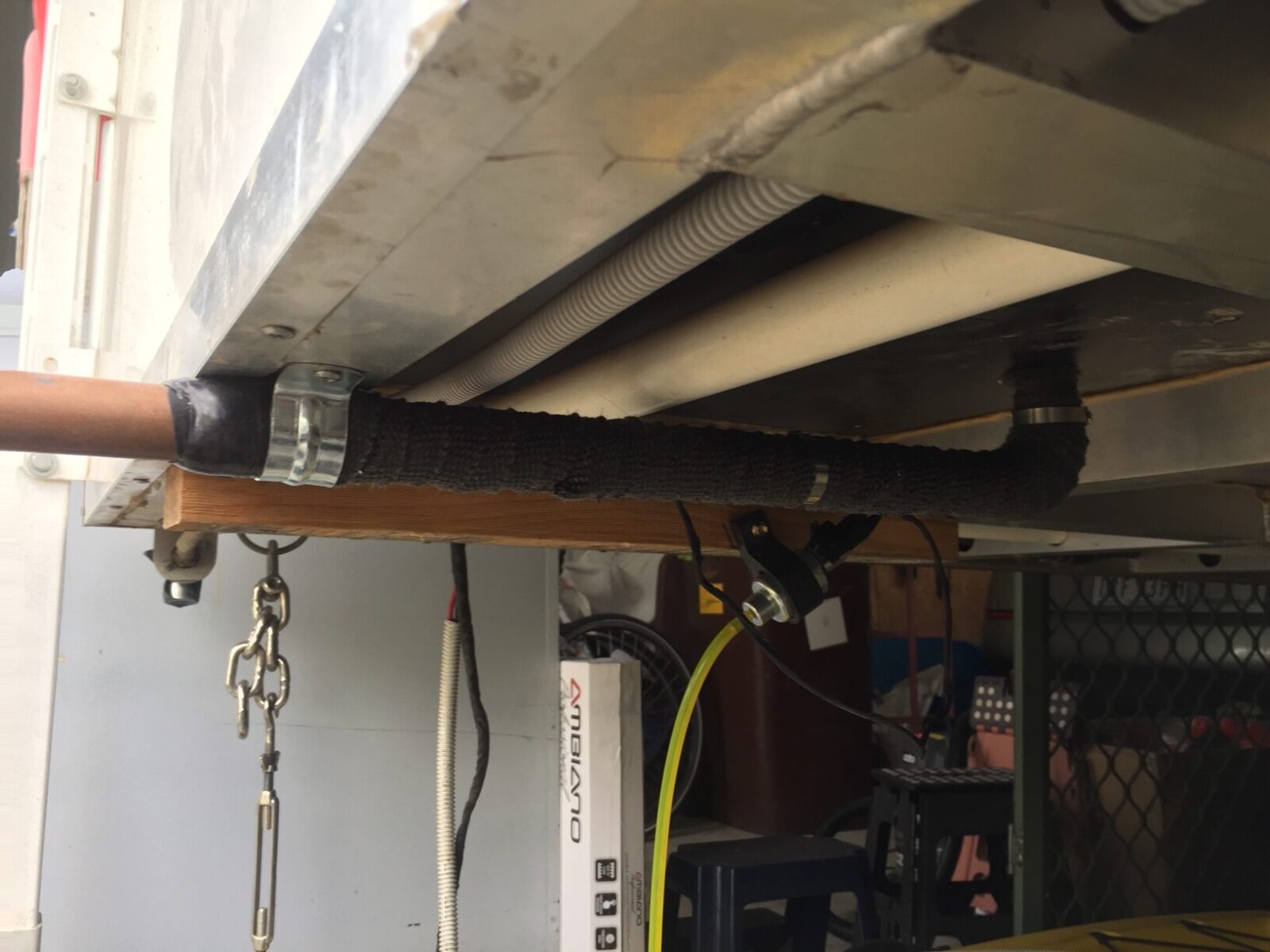
The attached photos show how one of our customers ran his diesel heater exhaust pipe out through his floor and then off to the side of his ute camper. He used our 25mm wide Black fibreglass exhaust wrap or lagging and wrapped the length of the pipe to avoid potentially damaging heat transfer to batteries, flooring or water pipes. The photo below shows the back of the heater and the exhaust pipe goes down through the floor.
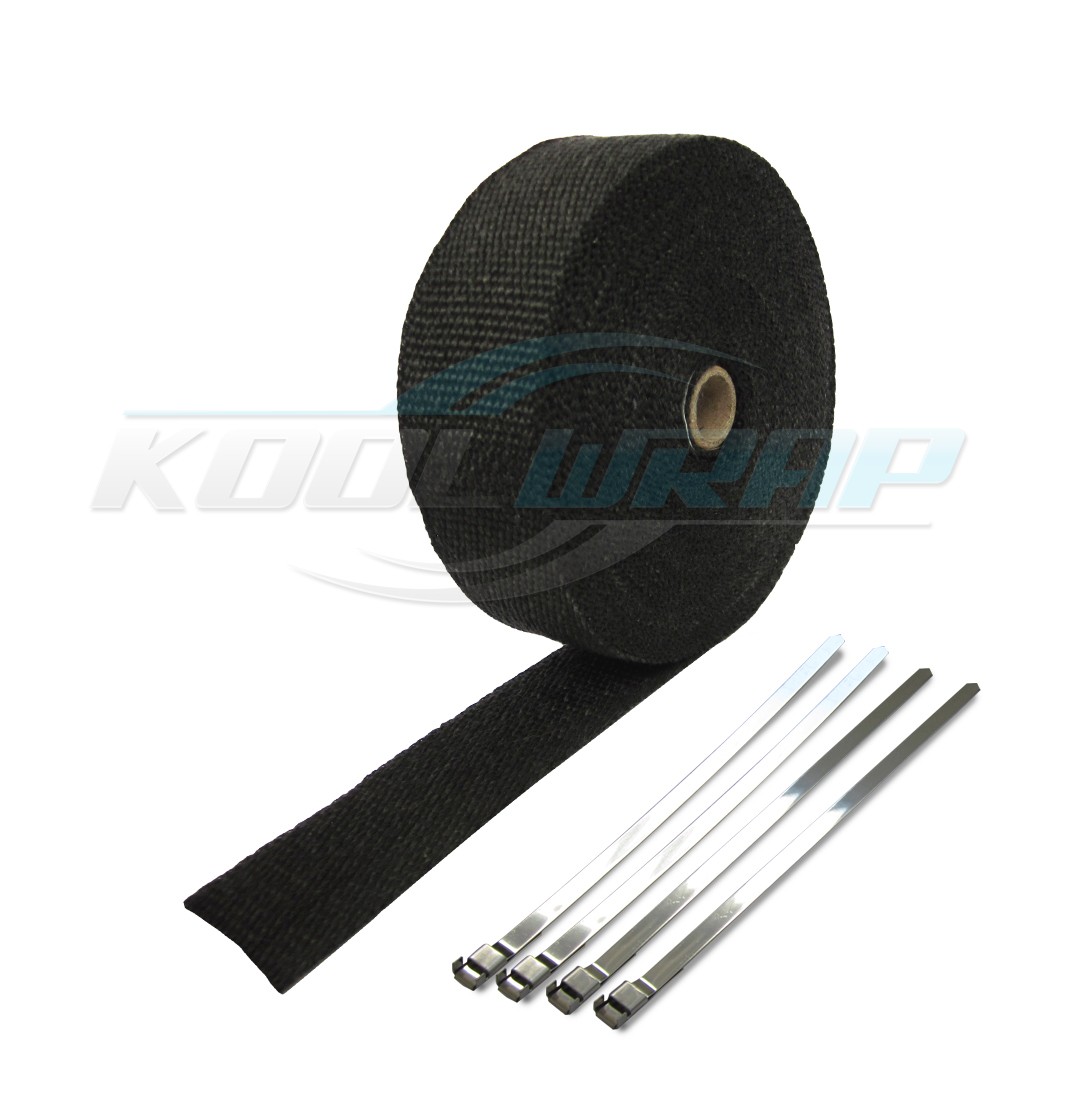
Our wrap is simple to install and is supplied with stainless steel ball or zip ties.
Call Andrew on 0412 548 609 for more information.