0 items - $0.00
No products in the cart.
A diesel heater exhaust pipe gets hot along its whole length, and in a caravan, camper or van conversion that pipe runs through the tightest part of the build. Insulating it keeps the heat inside the pipe and off the cupboard, the bed base and the wiring beside it.
This page covers where the heat actually goes, how much wrap you need, how to fit it and the two things to leave uncovered.
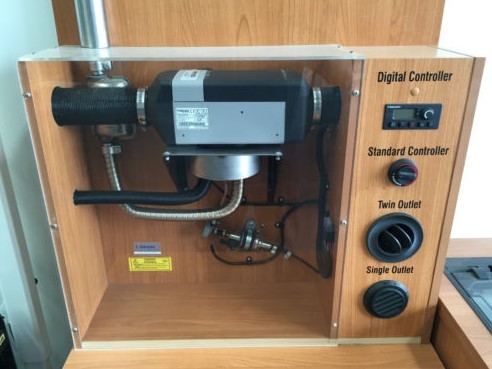
The exhaust is the hottest part of a diesel heater installation and it is usually the part with the least space around it.
On most fit-outs the pipe leaves the heater, runs under a bed base or through a cupboard floor, then exits through the vehicle floor or wall. Every one of those passes is a point where heat meets something that would rather not be hot. Timber, cabling, upholstery, water lines and stored gear all end up close to it.
Insulation does two things. It keeps more heat inside the pipe, which is where it is useful. And it keeps the outer surface cooler, which is what protects everything around it.
Three words for the same job, and you will see all three used for it.
A diesel heater exhaust sleeve is a pre-formed tube that slides over the pipe. Diesel heater exhaust lagging and diesel exhaust wrap both describe insulation wound along the pipe with an overlap. Kool Wrap supplies the wound kind, as an exhaust pipe insulation wrap cut to 25mm width for small-diameter heater pipes.
What matters is coverage and a firm fit, not which of the three words the product is sold under.
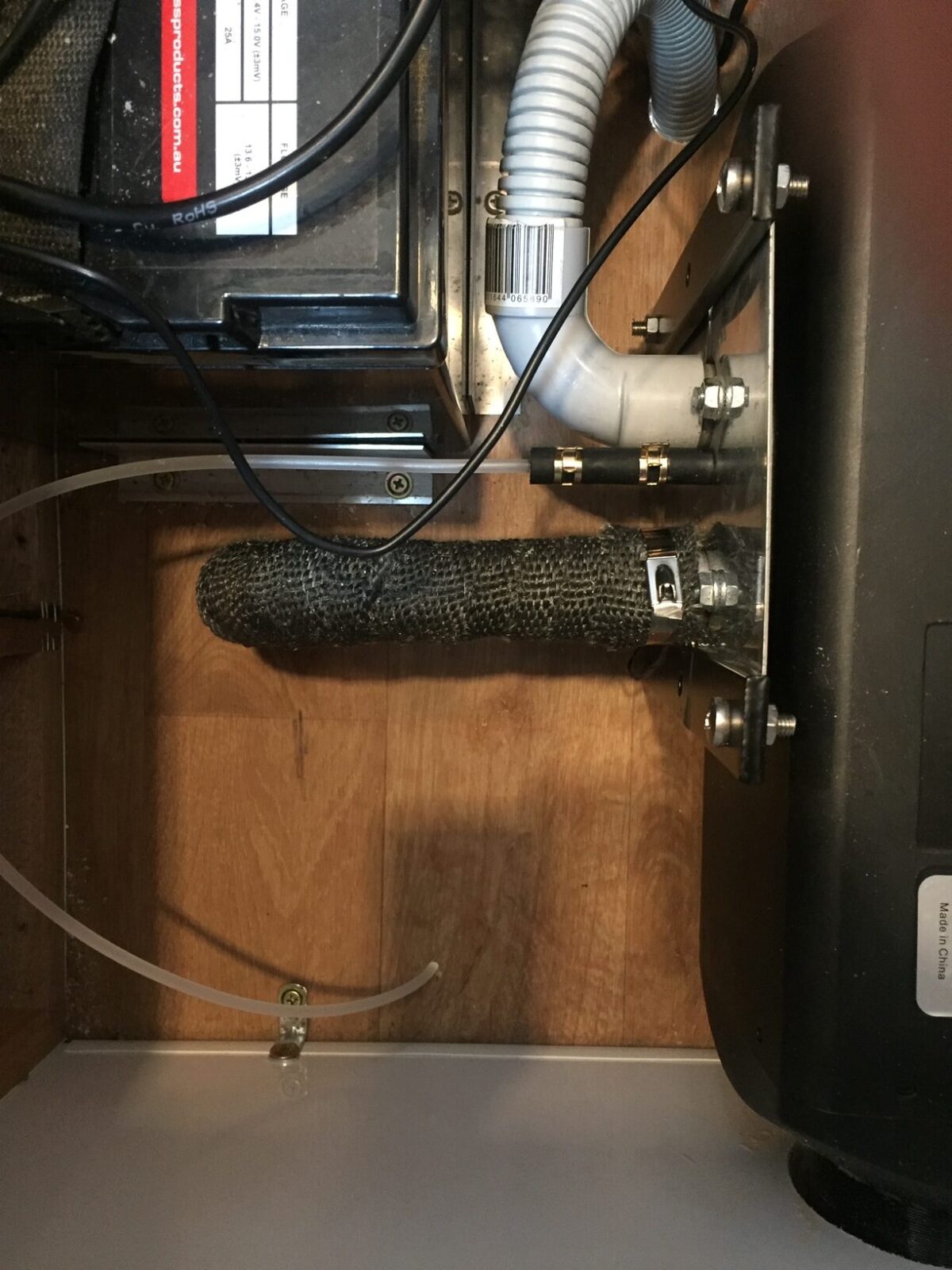
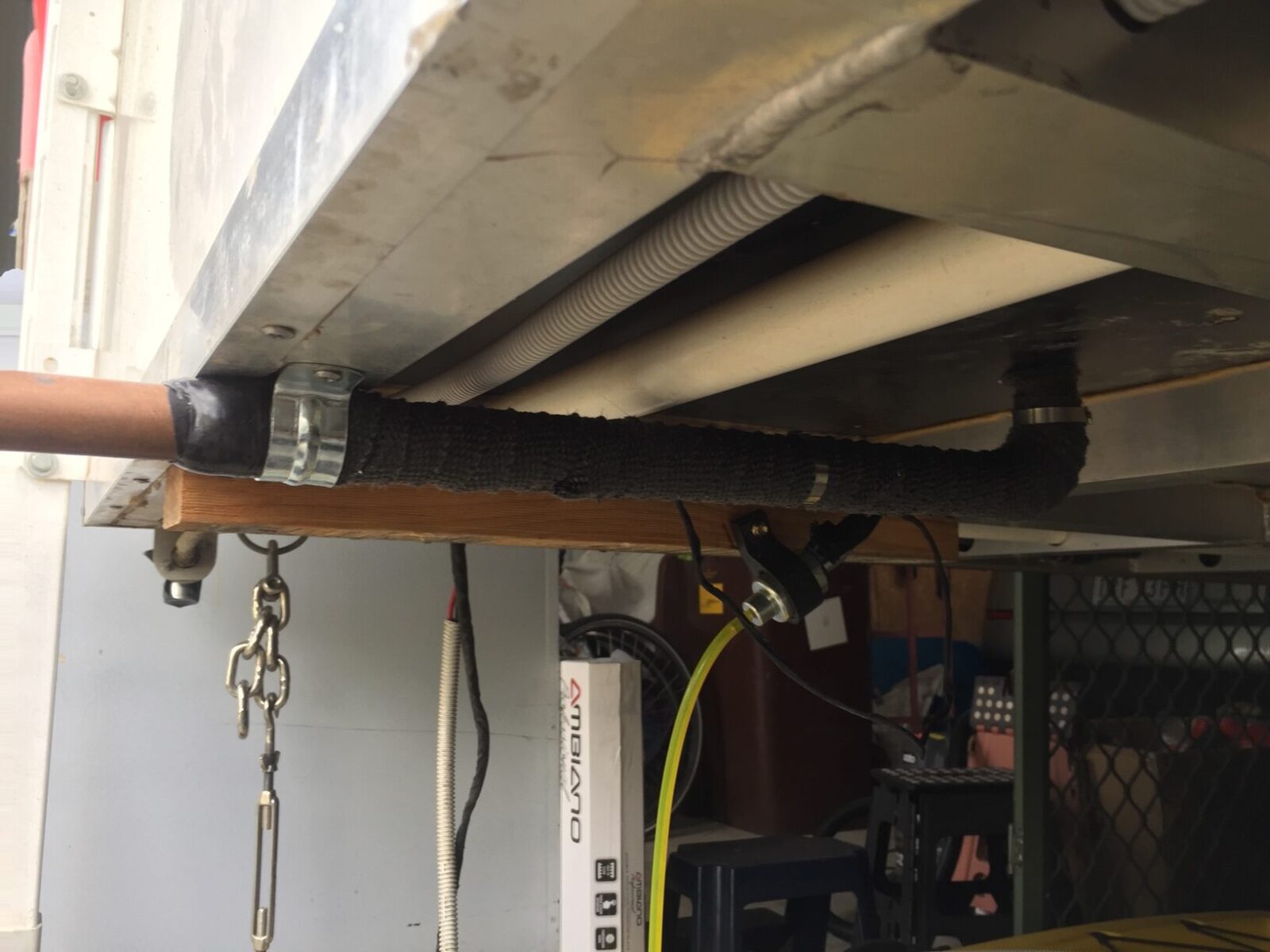
Measure the run before you order, from the heater outlet to the exterior termination, following the actual path rather than the straight line.
| Installation | Typical run | What to order |
|---|---|---|
| Heater under a seat, short exit through the floor | Under 1.5m | One kit, with wrap spare for a second pass at the hot end |
| Heater in a cupboard, pipe routed to the rear or side | 1.5m to 3m | One kit |
| Long run, or a double pass over the hottest section | Over 3m | Two kits |
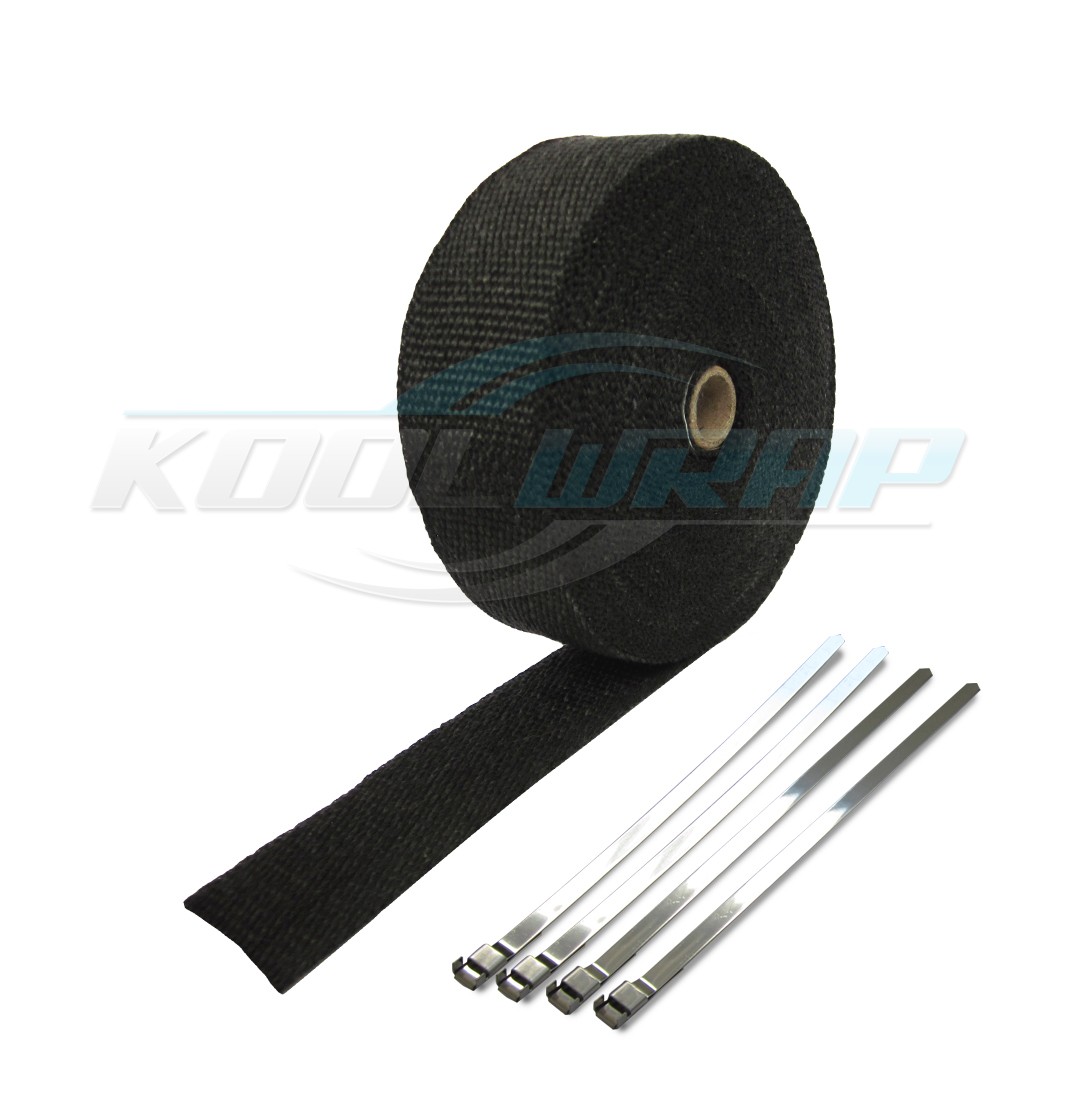
Each diesel heater exhaust insulation kit holds 4.5 metres of 25mm wrap and four stainless steel ties.
Add a margin. Wrapping with an overlap uses more length than the pipe measures, and bends use more again.
Wear gloves and long sleeves. The fibres irritate skin.
The exterior outlet. The termination is designed to sit in open air and dump heat. Do not wrap the last section or the outlet itself.
Anything the heater manufacturer says to leave clear. Every heater has its own instructions for routing, clearances, pipe support and termination. Those instructions take priority over anything on this page. Read them before you start and follow them where they differ.
A diesel heater burns fuel in a sealed combustion chamber that draws air from outside and vents outside. The combustion side is meant to stay sealed from the living space, and that depends on the exhaust staying sealed too.
Wrapping the pipe does not change that either way. What it does is reduce the surface heat. If a joint leaks, it still leaks under the wrap, and it is harder to see.
Check the joints and clamps before you wrap. Follow the heater manufacturer’s instructions. Fit a carbon monoxide alarm in the living space.
It keeps more heat inside the pipe rather than shedding it into the cupboard the pipe runs through. Treat it as protection for the build rather than as a performance change to the heater.
The kit is the same material family in a width that suits a small-diameter pipe. Automotive rolls in 50mm widths work on larger pipes and are awkward on a 25mm heater exhaust, which is why the kit is sized the way it is.
Wrap it wherever it runs near fuel lines, storage, cabling or anything that would be damaged by heat. An exposed run under the floor in clear air with nothing near it is the one section you can reasonably leave.
Insulating the pipe is a heat job. Kool Wrap does not sell a diesel heater silencer or muffler and this page is not about exhaust noise.
Tell us the vehicle, the heater position and the pipe run. Call 1300 44 33 34 or email sales@koolwrap.com.au. Kool Wrap has supplied heat protection in Australia since 1995 and ships Australia-wide with tracking sent after dispatch.